


Less Than Zero
 |
 |
 |
 |
 |
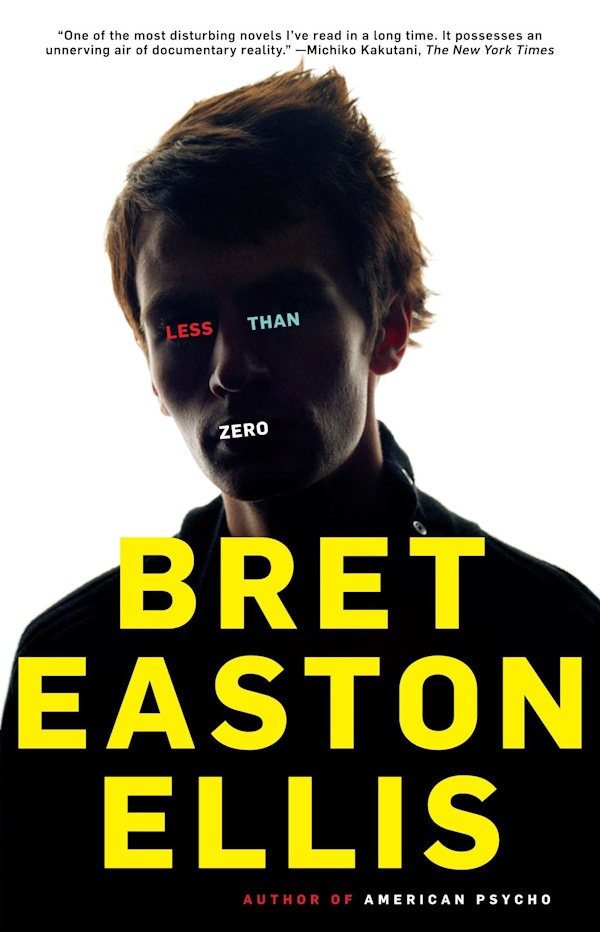
- Publication Date: 1985
- Written by: Bret Easton Ellis
- Page count: 208
I could make an entire list of things that I discovered through episodes of The Cinema Snob, and here's one of the rare instances where the thing in question is a book rather than a movie. In Brad's out-of-character review for the movie Endless Love, there's a point where he mentions that his favorite book of all time is Bret Easton Ellis' Less Than Zero. I thought that the plot description he gave of "a man's odyssey through the drug scene of the 1980s" sounded pretty interesting, so I started to keep an eye out for it when I made trips to bookstores. I finally picked up a copy when I was in college, and having read it a few times now, I can definitely see why the guy known for spotlighting the exploitation genre for a living would be a fan of it. If you're looking for a wholesome and uplifting read here, then you've definitely picked up the wrong book.
Less Than Zero is a snapshot of the life of a decadent youth in the drug-soaked upper class of 1980s Los Angeles. It follows Clay, an 18-year-old freshman in college who returns home for a few weeks on Christmas break. Even though he's only a few months out of high school, Clay has been a heavy drug user for several years, and spends most of his days in a coked-out stupor as he finds ways to pass the time with his various friends. If you've ever wanted a book that shows the severe damage that excessive wealth and substances can do to a person at a very young age, then look no further than this one. Clay and his friends are all very privileged people - all of them come from rich families that are involved with the entertainment industry in one way or another. Many of them are attending film schools or have producer family members, and most of the things that they enjoy are toys of the rich and powerful, such as high-end fashion brands or BMW / Mercedes cars. Despite having all of this wealth and opportunity served to them on a silver platter, none of the characters feel any sort of genuine fulfillment in life, and spend their days and nights chasing the next high of their choice.
The bulk of this book falls into a sort of pattern - Clay meets with a friend or two, gossips about something that someone they know is up to, indulge in cocaine, pills or other drugs, then attend a party where more gossip and drug use happens. This may seem a little repetitive, but what makes the book effective is that all of the characters share a similar sense of desperation and masked pain. Most of them are 18 or 19 years old, but they have all been indulging in these hedonistic lifestyles for years by this point. Other kids as young as 13-15 are seen at parties being introduced to cocaine and sex, implying just how young a lot of these people were when they first got into this scene. Through Clay's shallow and emotionless conversations with his friends, you get the feeling that they all know that what they're doing isn't truly "living", but at this point they simply don't care. Parental neglect mixed with easy access to money in a city known for its glamour and vices have trapped them in cycles of self-destruction simply to feel something.
What makes Clay an interesting narrator is that even though he has some semblance of a moral compass to him, he never seems to let it impact his actions very much. He regularly spends time with people who sell drugs to kids, take advantage of or sexually assault others, and even though he's not indulging in those behaviors himself, he doesn't do anything to intervene. For most of the book, he plays the part of a robotic observer - coldly describing scenarios like a woman shooting up heroin or the discovery of a corpse in the same way he would recount a random conversation with a stranger. He eventually does begin to question if what he and his friends are doing is even worth it, but it takes witnessing genuine atrocities like an authentic snuff film for him to get to that point. I don't want to spoil too much of the book by telling every terrible thing he witnesses, but you get the sense that even though Clay does have some sense of right and wrong, there is a growing dark side of him that has a fascination with the degredation of both himself and others.
Despite all of its disturbing subject matter, Less Than Zero is a very quick read. Its chapters are very short, and its prose style mostly consists of blunt, short sentences that are mostly free from excessive descriptors or flowery language. Some of these sentences feel incomplete, while others can run on for the entire length of a paragraph. This does a great job of illustrating Clay's states of mind, bouncing between the cold numbness of everyday life and the frantic speed of an hours-long cocaine binge. Something like that may seem unprofessional or even juvenile to some, but I think what makes it work is that it feels autobiographical in certain ways. Ellis started writing this book as a teenager, and got it published when he was only 21 years old and still in college. Having attended upper-class schools and later developing a reputation as a late-night partier, it's fairly obvious that Ellis channeled some of what he saw and felt at the time into the character of Clay. He would go on to use the same style in works such as American Psycho, and while he may stress the differences between himself and his characters in interviews, I'm still convinced that there's a dark part of his mind that none of us want to meet.
A review quote on the back of my copy describes Less Than Zero as a "slice-of-death novel", and I think that's a pretty good description of it. I like to group it with other works such as Larry Clark's Kids or Harmony Korine's Gummo that offer slice-of-life stories of youth ended too soon due to drugs or their own self-destructive tendencies. I'd recommend giving it a read, but only if you're up for feeling a little cold and hollow once you're finished with it.
