
The Devil's Honey
 |
 |
 |
 |
 |
- Release Date: August 21, 1986
- Directed by: Lucio Fulci
- Written by: Ludovica Marineo, Vincenzo Salviani, Jaime Jesus Balcazar and Lucio Fulci
- Runtime: 1 hour 22 minutes
After Murder-Rock was released, it would take two whole years for another Lucio Fulci film to hit theater screens. For a director who was used to working so much that he could pump out one or two movies a year, a break like that was sort of an unusual move. But behind the scenes, there was a very painful reason for this hiatus from filmmaking. By the second half of 1984, the viral hepatitis that he contracted during a shoot (likely for Conquest) had compounded with his diabetes and led to a nasty case of cirrhosis of the liver. His health got so bad so quickly that he nearly died, and the slow recovery process went on for many months. He was offered a few projects during this time, but was simply too sick to direct them, instead passing them on to other directors and doing some script work when able to do so. By 1986, he had finally recovered enough to return to making movies, even though both his health and the Italian genre film market were in much frailer states than they had been before. For his first movie back in the saddle, Fulci decided to switch things up yet again and try one more genre that he had never done before. This resulted in The Devil's Honey, an erotic thriller that, to me, is one of the most hopeless movies in his entire genre output.
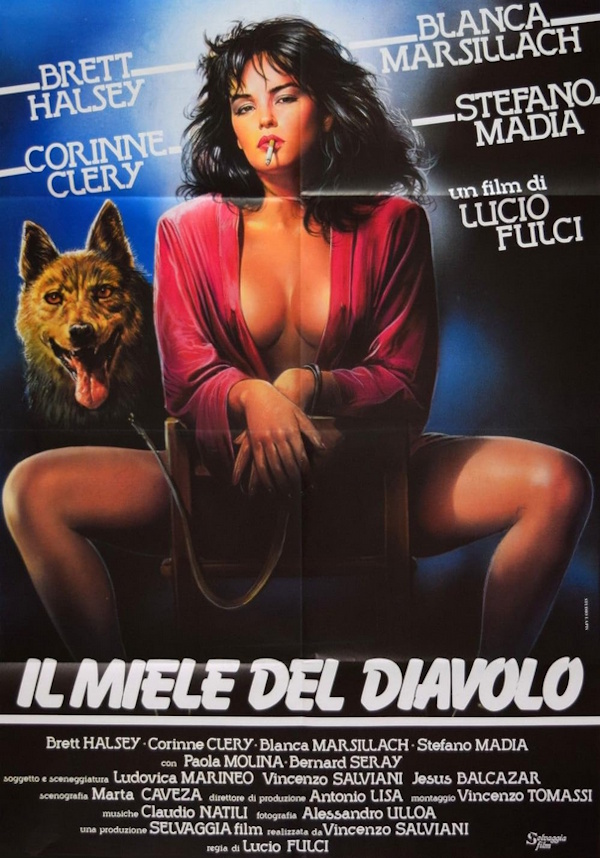
The plot follows Jessica, a young woman who is in a relationship with a saxophone player named Johnny. Even though Johnny is sex-obsessed and frequently disregards Jessica's emotional needs in favor of his own physical pleasures, she still clearly loves him and wants to eventually start a family. One day, Johnny hits his head in a motorcycle accident and eventually falls into a coma. Because the surgeon who is scheduled to perform his operation is distracted by thoughts of his own crumbling marriage, he fails to act in time, and Johnny dies on the operating table. Grief-stricken and furious, Jessica decides to get revenge on the doctor for his carelessness. The Devil's Honey is a welcome change of pace at this point in Fulci's filmography because it feels unlike any other movie he made before or after it. There are no zombies, Hellish fiends or any other makeup-heavy horrors to be found, nor are there any ludicrous death sequences or special-effects trademarks like graphic eyeball violence. In fact, his usual camera tricks and scene compositions are also largely absent. Instead, we're treated to a story that is carried entirely by its characters and the actors' performances. For an Italian genre film, that sort of thing is really rare! Don't let the lack of typical Fulci-isms fool you into thinking that this is some mainstream drama film, though. There's still a good amount of uncomfortable darkness here that hasn't been seen since his earlier giallo works like Don't Torture a Duckling.
Blanca Marsillach steals the show as Jessica. A couple of interviewees on the Blu-Ray special features mention her performance being campy and unbelievable, but I don't see that at all. I think it works for me because of the range of emotions she shows and the way that they swing and transform throughout the film. She starts out obsessively in love with Johnny, even though there's an underlying layer of frustration and dissatisfaction during their time together. After his death, she's consumed by extreme sadness, longing and suicidal thoughts before finally giving into steely dominance and wrath. She's so consumed by the loss of Johnny that she's willing to resort to torturing and nearly killing the man who let him die, and it's so interesting to watch because their relationship was anything but healthy and stable. At many points in the film, Johnny is shown coercing Jessica into various sex acts that she's visibly uncomfortable with or disgusted by, such as one scene where he forces her to hold a gun between her legs while he takes pictures. Any time she refuses to perform for him or speaks out, he guilt trips her or insults her until she eventually caves in. Their relationship is very one-sided and transactional, and through her extreme grief, Jessica slowly comes to realize this and begins to question the depth of their love as her revenge plays out. Between these conflicting feelings over Johnny and how she seems to derive pleasure out of hurting both herself and the doctor, it begs the question: Will she ever find another healthy love, or is she destined to walk a path of destruction until its inevitable end? It's a very bleak story with an ambiguous resolution, and even though the last act can be pretty out-there, it has some of the most realistic human torment in any Fulci film.
The tone of this movie shifts wildly across its runtime, and it does a great job at blending conflicting feelings and wringing mixed emotions out of the audience. Being the type of movie that it is, it naturally has a lot of sex scenes, and they push the limits of softcore about as much as possible without crossing the line into hardcore territory. However, they never feel truly steamy or erotic because of how dark the surrounding circumstances are. A seductively-smooth saxophone soundtrack may bring some sensuality to a love scene, but when the scene in question begins with Jessica repeatedly saying "no" as Johnny forces himself onto her, you'll likely be feeling uncomfortable and wishing the scene would end already. One of my favorite tonal clashes is done in a later scene when Jessica is tormenting the doctor. She's dragging him through the ocean on a dog collar, forcing his head underwater and nearly drowning him. When she realizes she may have went too far, she says "I'll decide when you die," drags him to shore and revives him. Shockingly, the doctor seems to be turned on by this turn of events, and as Jessica lies on top of him and reasserts that she's going to kill him, the music swells with same romantic tone as if the two had just shared a first kiss on a date. Both of these characters are incredibly unstable in their own ways and are looking for someone to bring a sense of deeper connection and passion in their lives. The movie wants you to think that there may be some sort of messed-up relationship that could take off between the two, but they're bound to tear each other apart with the worst aspects of their personalities. Romance, tragedy, obsession, punishment and longing all blend together in this weird little pot of Italian exploitation. Out of all of Fulci's experimental one-off projects, this is easily the one that best hits the mark, and it really shows that he still had the skills to excel in different genres if given the chance.
The Devil's Honey may lack the typical genre tropes that fans of Fulci's work would likely expect, but don't let that convince you that this movie is worth skipping over. It packs an emotional punch that will likely leave you feeling unsettled and a little contemplative once it's over with. I honestly think it's kind of sad that he got stuck with making strictly horror films for the rest of his career, since the budgets he ended up working with would have been perfectly fine for telling more stories like this. It's an interesting what-if crossroads moment in his career, and if you want to see the later-era Maestro bring out the closest thing to his "tender" side, give this one a shot!